
Quick answer: Yes — foreigners can buy property in Montenegro almost as freely as locals. You can own an apartment or a house outright in your own name, the country uses the euro, and a typical purchase completes in 4–8 weeks through a licensed notary. This guide walks you through every step — who can buy, the real costs and taxes, how to check a title is clean, where to buy, and how to turn a purchase into a residence permit. It is maintained by the licensed brokers at Montenegro Estates, who have been closing deals on the Montenegrin coast since 2014.

Why buy property in Montenegro in 2026
Montenegro packs 300 km of Adriatic coastline, UNESCO-listed Kotor Bay, and mountain national parks into a country smaller than Connecticut — and prices that are still a fraction of neighbouring Croatia. A few things make 2026 a particularly interesting moment to buy:
- EU accession on the horizon. Montenegro is the front-runner to join the European Union. According to the European Commission, it has opened all 33 negotiating chapters and provisionally closed 13, with membership targeted toward the end of the decade. Property markets historically re-rate upward as a country approaches EU membership.
- The euro, already. Montenegro uses the euro as its currency, so there is no exchange-rate risk for euro-zone buyers and no local-currency banking surprises.
- Low, simple taxes. A progressive transfer tax on resales (3% up to €150,000, then 5% to €500,000 and 6% above), annual property tax under 1%, and one of Europe’s lowest income-tax regimes.
- 0% buyer commission. At Montenegro Estates the buyer pays no agency commission, so you keep more of your budget for the property itself.
Can foreigners buy property in Montenegro?
Quick answer: In almost all cases, yes. Foreign nationals — including US, UK, and other non-EU citizens — can buy apartments, houses, and commercial units in their own name with the same ownership rights as Montenegrin citizens. There is no nationality-based restriction on built property.
Foreign buyers can generally own apartments and houses, subject to statutory exceptions. Article 415 restricts foreign ownership of agricultural land, forests and forest land, natural resources, public-use property, certain protected cultural monuments, islands, the one-kilometre land-border zone and designated security areas. A foreign individual may exceptionally acquire up to 5,000 m² of agricultural or forest land when the transaction includes a residential building on that land. Check the specific property’s status before buying; a company is not a universal workaround.
Every transaction is registered with the state Real Estate Administration (Cadastre), and you can verify ownership and any mortgages or liens online through the official eKatastar portal before you commit. For a deeper legal walkthrough aimed at non-EU buyers, see our complete legal guide for US, UK & non-EU buyers.

The buying process, step by step
A Montenegrin purchase is notary-led and typically takes 4 to 8 weeks from accepted offer to registered ownership. Here is the path every buyer follows:
- Reserve the property. Once you have chosen a property and agreed a price, a reservation agreement and a small holding deposit take it off the market.
- Due diligence on the title. Your lawyer or agent checks the property’s listing (list nepokretnosti) at the cadastre to confirm the seller is the registered owner and that there are no mortgages, liens, or unresolved inheritance claims. You can cross-check this yourself on eKatastar.
- Pre-contract & deposit. A pre-contract (predugovor) is signed before a notary and the deposit — usually 10% — is paid. This binds both sides to the agreed terms.
- Main sale contract. The final contract (ugovor o kupoprodaji) is executed before a notary, who is legally required to verify identities, the title, and that all conditions are met. The balance of the price is paid here.
- Calculate and declare property transfer tax to the competent local tax authority within 15 days of the tax liability arising, and pay it when submitting the return. For an ordinary completed-property sale, the liability arises when the contract is concluded. The tax is not a notary fee. Articles 15 and 16 of the Property Transfer Tax Law apply.
- Register your ownership. The notary submits the contract to the Real Estate Administration, which records you as the new owner in the cadastre.
- Get the keys. On registration you take possession. Utilities are transferred into your name and, if you wish, you can begin your residence-permit application.
Throughout, the notary is a neutral public official — not the seller’s agent — which gives both parties legal protection. Using a lawyer in addition is optional but recommended for non-residents.
Costs & taxes — what you really pay
Budget roughly 3–5% on top of the purchase price for a typical resale. Here is the full breakdown:
| Cost | Rate | Notes |
|---|---|---|
| Real-estate transfer tax | 3% / 5% / 6% (progressive by price band) | On resale (second-hand) property, paid by the buyer |
| VAT (new build) | 21% | Applies to a developer’s first sale instead of transfer tax — usually already included in the listed price |
| Notarial formalities | Contract certification | Confirm the required documents and registration steps with the notary. |
| Legal fee (optional) | ~1% | Recommended for non-resident buyers |
| Buyer agency commission | 0% | Free for buyers at Montenegro Estates |
| Annual property tax | 0.25%–1% | Of market value, set by each municipality |
| Capital gains tax (on sale) | 15% | Property-sale capital gains are generally taxed at 15%. Article 37g exempts a property that served as the taxpayer’s only and main residence. That provision does not impose a two-year residence requirement. Confirm the facts and the applicable exemption with a qualified tax adviser before relying on it. |
For a worked example with real numbers, see our complete cost of buying property in Montenegro, and check current price-per-square-metre by region in the Montenegro Property Price Index. Tax rates and procedures are published by the Montenegro Tax Administration; always confirm your specific situation with a local tax adviser.
Getting a residence permit through property
For property-based temporary residence, the applicant must own at least half of the property. Where the value requirement applies, the tax-assessed value must be at least €150,000. This value requirement does not apply to EU citizens and their family members, or citizens of Iceland, Liechtenstein, Norway and Switzerland. Other residence conditions still apply. Existing property-based permits issued before the 2026 amendment took effect have transitional renewal rules under Article 217b. See the detailed property residence guide.
Montenegro Property Residency 2026 Guide

Where to buy: the best regions
Each stretch of the coast has its own character and price point. Browse live listings by area, or open the price index to compare €/m² before you choose.
- Budva — the coast’s tourism capital: beaches, nightlife, and the strongest short-let rental demand. The most liquid resale market.
- Kotor — UNESCO-listed Old Town on a dramatic fjord-like bay; limited supply keeps stone-town apartments scarce and prized.
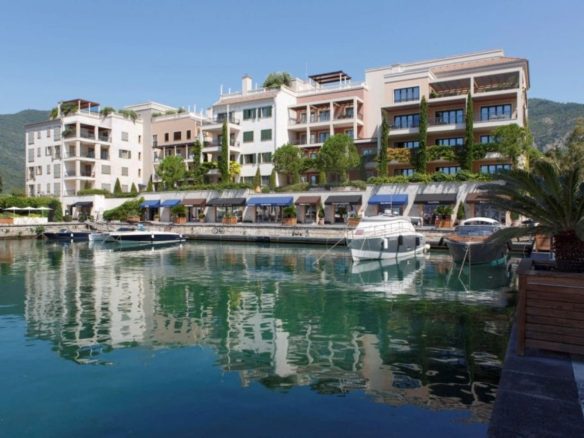
- Tivat — home to Porto Montenegro, the luxury marina; the premium, yacht-set end of the market.
- Herceg Novi — greener and quieter at the mouth of the bay, popular for year-round living.
- Bar and Ulcinj — the southern coast, with the best value per square metre and long sandy beaches.
- Boka (Kotor) Bay — waterfront stone houses around the whole bay for buyers who want character over convenience.
Financing & payment
Most foreign buyers purchase in cash, as local mortgages for non-residents are limited and come with higher rates and deposit requirements than buyers may be used to at home. Many investors instead arrange financing in their home country or against existing assets. Funds are transferred in euros to the notary or directly to the seller on completion; keep clear records of the source of funds, which Montenegrin banks and notaries are required to document. For off-plan purchases, developers often offer staged payment plans tied to construction milestones.
Common mistakes to avoid
- Skipping the cadastre check. Always confirm the seller is the registered owner and the title is free of liens on eKatastar before paying any deposit.
- Confusing an urbanised plot with buildable land. Not every plot has planning permission — verify the zoning before you buy land.
- Foreign buyers can generally own apartments and houses, subject to statutory exceptions. Article 415 restricts foreign ownership of agricultural land, forests and forest land, natural resources, public-use property, certain protected cultural monuments, islands, the one-kilometre land-border zone and designated security areas. A foreign individual may exceptionally acquire up to 5,000 m² of agricultural or forest land when the transaction includes a residential building on that land. Check the specific property’s status before buying; a company is not a universal workaround.
- Ignoring legalisation status. Some older buildings were built without full permits; check the object is legally registered.
- Underbudgeting the extras. Add 3–5% for tax and fees on top of the headline price.
Frequently asked questions
Can a foreigner buy property in Montenegro?
Foreign buyers can generally own apartments and houses, subject to statutory exceptions. Article 415 restricts foreign ownership of agricultural land, forests and forest land, natural resources, public-use property, certain protected cultural monuments, islands, the one-kilometre land-border zone and designated security areas. A foreign individual may exceptionally acquire up to 5,000 m² of agricultural or forest land when the transaction includes a residential building on that land. Check the specific property’s status before buying; a company is not a universal workaround.
How much tax do I pay when buying property in Montenegro?
Resale property carries a one-time, progressive transfer tax paid by the buyer — 3% up to €150,000, 5% from €150,001–€500,000, and 6% above €500,000. New-build first sales are subject to 21% VAT instead (usually included in the price). After purchase, annual property tax is 0.25%–1% of market value, set by the municipality.
How long does it take to buy property in Montenegro?
A typical purchase completes in 4–8 weeks from accepted offer to registered ownership, depending on due diligence and how quickly the cadastre processes registration.
Does buying property give me residency in Montenegro?
For property-based temporary residence, the applicant must own at least half of the property. Where the value requirement applies, the tax-assessed value must be at least €150,000. This value requirement does not apply to EU citizens and their family members, or citizens of Iceland, Liechtenstein, Norway and Switzerland. Other residence conditions still apply. Existing property-based permits issued before the 2026 amendment took effect have transitional renewal rules under Article 217b. See the detailed property residence guide.
Montenegro Property Residency 2026 Guide
What is the capital gains tax if I sell later?
Property-sale capital gains are generally taxed at 15%. Article 37g exempts a property that served as the taxpayer’s only and main residence. That provision does not impose a two-year residence requirement. Confirm the facts and the applicable exemption with a qualified tax adviser before relying on it.
Ready to start your search?
Browse hundreds of verified listings across the Montenegrin coast — with 0% buyer commission and a team that has worked here since 2014.
About this guide. Written and maintained by the Montenegro Estates team — licensed real-estate brokers operating on the Montenegrin coast since 2014. This article is general information, not legal or tax advice; confirm your specific situation with a qualified Montenegrin lawyer or tax adviser and the official Government of Montenegro resources. Last updated: June 2026.